
Published on:

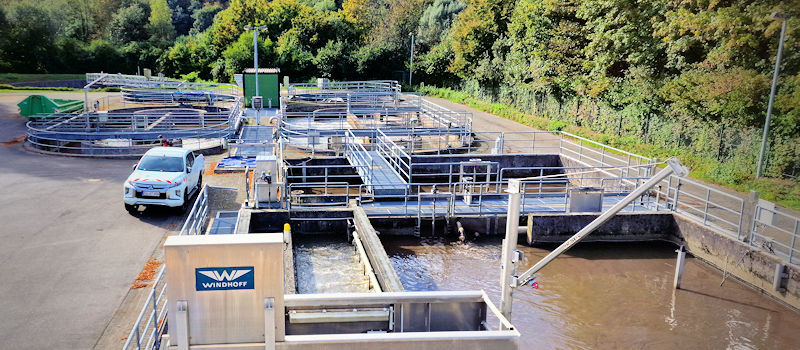
A digital assistance system developed by WTE is now supporting regular operations at the Windeck-Rosbach wastewater treatment plant. The system detects upcoming heavy rainfall events at an early stage and automatically adjusts return activated sludge control – increasing operational reliability and supporting consistent wastewater treatment performance.
From development to real-world application
Following a successful testing phase, WTE’s in-house developed return activated sludge regulation module is now in regular operation at the Rosbach wastewater treatment plant in the municipality of Windeck. Based on machine learning, the system reliably predicts when heavy rainfall and the associated increased load on the plant’s inlet can be expected.
Several hours before the predicted heavy rainfall inflow reaches the plant, the return activated sludge pumps are adjusted accordingly. Active sludge is specifically directed to where it is needed for wastewater treatment: the aeration basin. As the wastewater volume increases during the heavy rainfall event, the pumping capacity of the return activated sludge pumps is reduced at the same time. This improves the separation of sludge flocs from the treated wastewater.
The system therefore supports the treatment plant on two levels: it helps manage peak loads caused by heavy rainfall while supporting the quality of the treated effluent.
A step-by-step approach to regular operation
When introducing the system, a key priority was ensuring that the automated interventions were transparent and understandable to the operators. Initially, the plant team was able to observe when and how the control system would theoretically intervene. After several events had been monitored and the predicted interventions had been assessed as plausible, the system was activated and allowed to influence the plant controls.
The reliability of the forecasts has also been convincing. According to the plant team’s experience so far, the predicted rainfall events can be cross-checked using weather apps and usually occur as forecast.
If the module should fail, the previous control system automatically takes over.
Andrea Bartkowiak, a user of the software solution at the Windeck-Rosbach wastewater treatment plant, sees a major benefit in increased operational reliability and in supporting plant operators. Against the backdrop of the shortage of skilled workers and growing workloads with unchanged staffing levels, digital assistance systems can provide valuable support.
The aim is not to replace the experience and expertise of plant operators. Instead, digital assistance is intended to help identify relevant developments at an early stage and provide a sound basis for operational decisions.
Potential for further applications
The successful application in Windeck-Rosbach also demonstrates the potential of digital assistance systems for wastewater treatment plant operations. Possible future applications include controlling excess sludge removal based on sludge age, optimizing coagulant dosing and adjusting blower operation according to expected hydraulic and pollutant loads.
Energy management is another promising area. Digital assistance could help to manage peak energy demand and reduce electricity consumption while maintaining operational reliability. In addition, future systems could provide early warnings of developing equipment issues, for example by detecting unusual increases in power consumption.
The experience gained in Windeck-Rosbach suggests starting with small, clearly measurable applications when introducing digital assistance systems. Being able to observe control interventions before allowing the system to act autonomously is important for identifying potential issues and building trust. At the same time, operators should always be able to deactivate AI-based control and return to conventional operation.
For WTE, successful regular operation at Windeck-Rosbach marks an important milestone: an in-house developed digital assistance solution has moved from development and testing into real-world application at a wastewater treatment plant.
The experience so far is particularly encouraging: the predictions have proven highly reliable – and the potential for further applications is significant.
Copyright: WTE Wassertechnik GmbH